


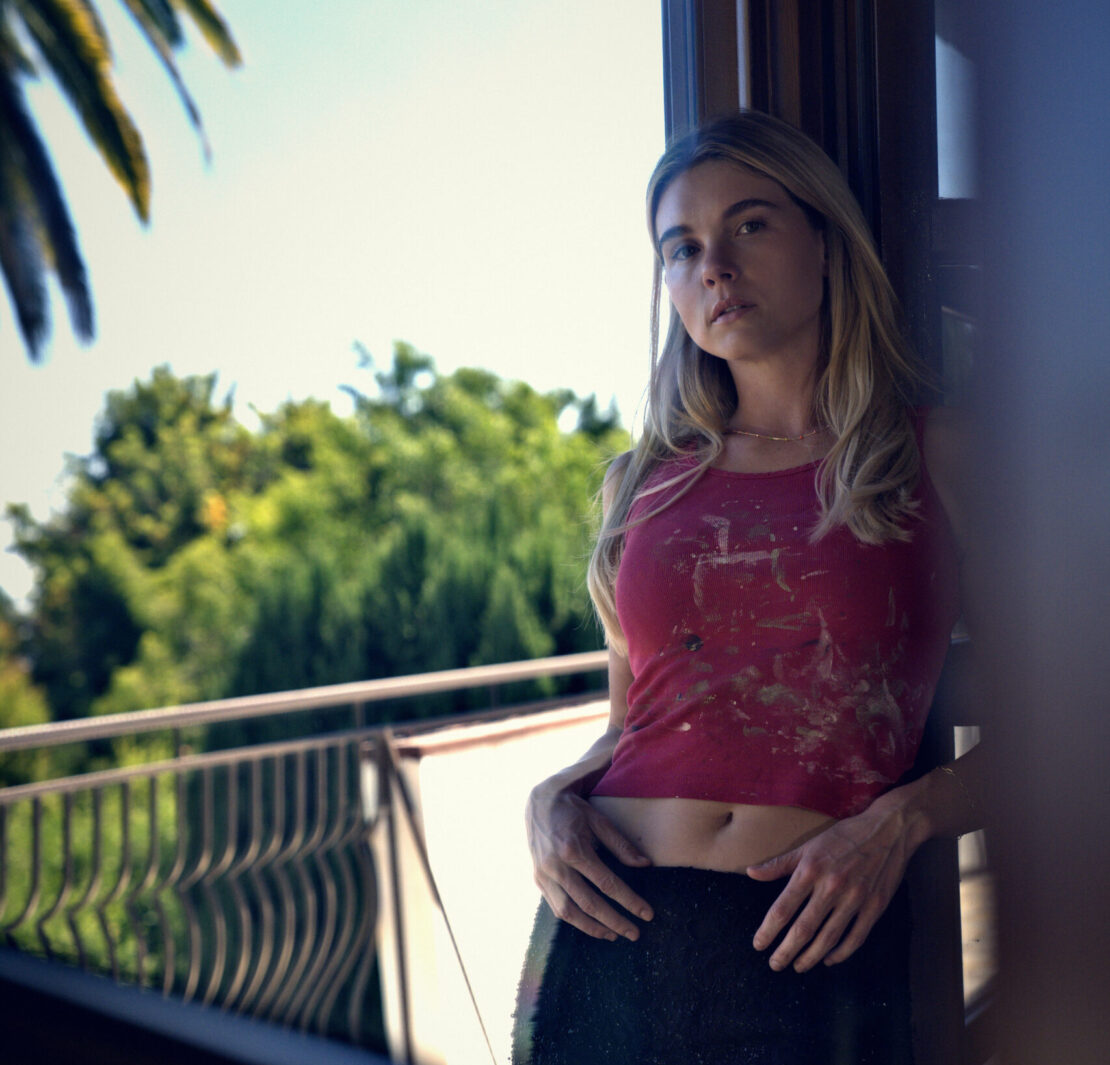
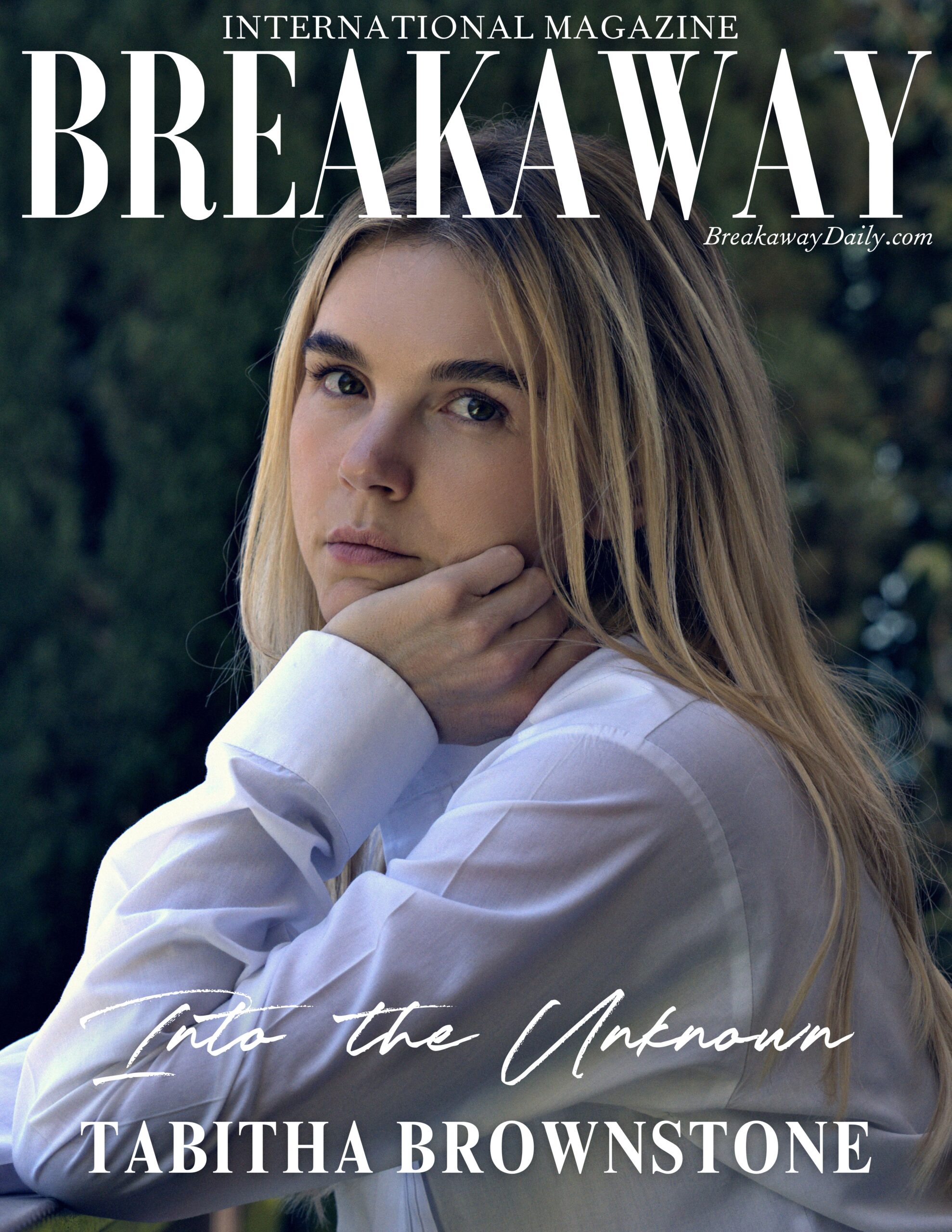
By midmorning, the Florida heat has already settled in. The air hangs heavy on your skin, and everything seems to move at a slightly different speed. Around the swampy water, the crew checks equipment, shifts things around, and waits for the next setup. Nearby, Tabitha Brownstone waits for her turn, watching it all unfold.
There’s mud underfoot, humidity everywhere, and a constant reminder that this isn’t some soundstage dressed up to look like a swamp. It’s the real thing.
This is the swamp. And somewhere out there are real alligators.
Beneath the Surface
It is an unusual place to spend a workday, even for an actor. Tabitha is starring in Gator Face, the new horror-thriller from Epic Pictures and DREAD, written and directed by Padraig Reynolds. Tabitha plays Claire alongside Amariah Dionne, Scot Scurlock, and Nikolas Kolasinski. The film follows a group of friends on a Florida vacation hunted through the swamp by a cult that feeds people to alligators in service of an old reptilian god.
The production took Tabitha to Saint Augustine, Florida, last October last October for a story that requires considerably more than reacting convincingly to something that will be added later.
The setting is real. The heat is real. The gators are real.
Tabitha wades in without much apprehension. It’s not her first time. She has always had a habit of throwing herself into the thick of things, whatever the challenge may be. Taking on whatever comes next with curiosity, energy, and very little hesitation. On this particular day, she’s just doing it more literally than usual.
Uncharted Waters
Tabitha has spent much of her career navigating uncharted waters. She began acting as a child, moved through television and film, created and produced her own series, wrote and performed a one-woman comedy show, built an audience through character work online, and has continued finding new ways to make something when an opportunity didn’t already exist for her.
Now she is wading through a Florida swamp.
Tabitha appears to have a particular relationship with pushing the limits. Willing to find out what happens if she says yes before she knows exactly where the yes will take her. That instinct has shaped much of her career, even if it was never part of a carefully mapped-out plan.
She was a kid the first time she stood on a Hollywood set, cast as young Domino opposite Keira Knightley in Tony Scott’s Domino. It’s the kind of early credit that could have become the whole story, the thing a career gets measured against for the next twenty years. It didn’t, mostly because she didn’t stay in one place long enough to let it define her.
She moved into television with a recurring role as Lauren Jacobson on NCIS, guest spots on Will Trent, The Middle, The Real O’Neals. Somewhere in the middle of all that, she did a national commercial for Chase Bank opposite Kevin Hart, which she brings up almost as a punchline: a strange footnote about getting to test her comic timing against one of the best in the business for a bank ad.
Plunging into Darkness
There is a particular pressure that comes with being known for something early in your career. “Once people have an idea of you, it can be surprisingly difficult to move outside it. The label becomes convenient. Other people know what to expect. Sometimes you know what to expect from yourself.”
Tabitha kept moving, even when it meant going against the current.
She trained at Berg Studios, Susan Batson Studio, and Playhouse West on the dramatic side, while studying comedy at UCB and The Groundlings on the comedic one. The combination says something about the kind of performer she was becoming. Acting gave her a way into other people’s lives. Comedy gave her permission to play with them.
She jokes she might be the only person who was actually born and raised in Los Angeles, a city built almost entirely from people who came from somewhere else. It says something about how she talks about her own career: like someone who knows most people’s stories don’t start where they end up, and isn’t in any hurry to insist hers already has.
Eventually, she started writing.
Then producing.
Then creating projects in which she could do all of it.
Her series FICKLE, which she co-created, co-wrote, produced and starred in, follows a disgraced reality star clawing her way back into relevance. Funny on its surface, but built around something with real teeth: the fear of becoming yesterday’s news, of losing whichever version of yourself the public had agreed to accept and having to figure out what comes next.
She didn’t wait around for someone else to greenlight it. She built it herself, the same way she built the one-woman comedy show that came after. One that sold out its run at Hollywood Fringe and then kept selling out across Europe, including a run at Edinburgh Fringe, a room with a reputation for showing no mercy to a joke that doesn’t land.
On set, standing at the edge of a stretch of water in ninety-degree heat with mud past her ankles isn’t so different really, from waiting out a silent room mid-set. The discomfort of not knowing yet whether the thing is going to land.
Where the Wild Things Are
Tabitha’s move into horror makes sense in that context. Gator Face may look like a departure from the comedy most people know her for, but underneath the change is the same willingness to test herself and step into the unknown. The film puts her in a very different emotional register and places her in a setting where the usual distance between actor and environment all but disappears.
What makes Gator Face feel less like a departure, though, is the instinct behind it. Tabitha has spent much of her career stepping outside whatever felt familiar and seeing what happened next. She created her own opportunities, moved between comedy and drama, built projects from the ground up, and kept finding new ways to put herself somewhere she hadn’t been before.
The difference this time is that the discomfort wasn’t just part of the work. It was all around her. It’s a willingness to venture into unfamiliar waters and see what happens there. It’s not being afraid to be out of your element and the instinct to keep moving toward something she hasn’t done before.
“I am not particularly interested in waiting until something feels comfortable before trying it. I get curious. I say yes. Then I figure it out.”
She had to spend weeks in an actual swamp making it happen, surrounded by the things horror movies usually have to manufacture — with alligators that weren’t props.
A month is a long time to spend somewhere that isn’t built for people. Long enough that a cast and crew stop being colleagues and start being something closer to a unit that survived a thing together. “By the end, they were my Gator Family,” she remarks.
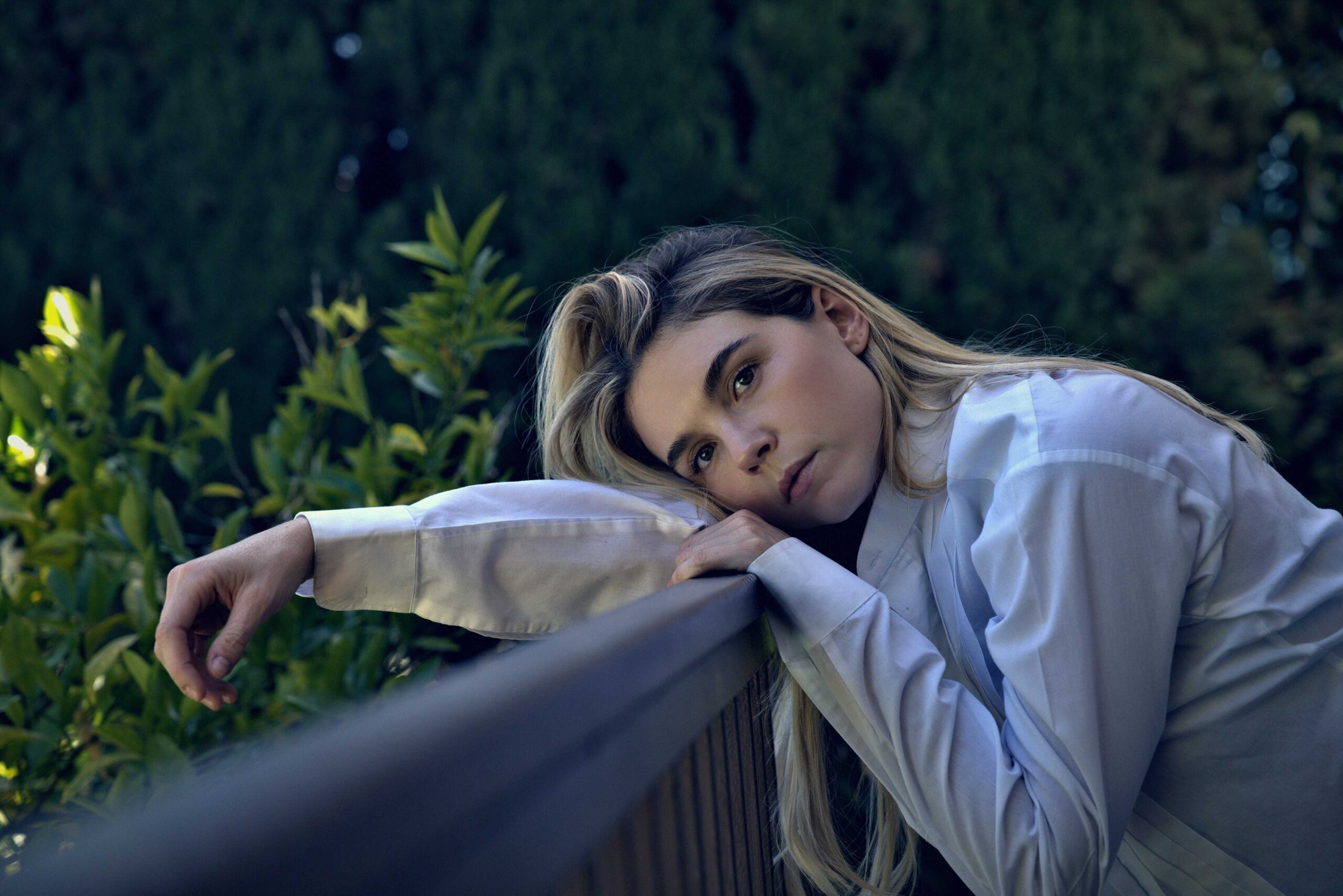
The Reptile’s Domain
This is where Gator Face was made, not on a soundstage dressed to look like wetlands, but in actual wetlands, with actual alligators, for a film that needed the difference to be visible on screen.
That’s the thing about this shoot that kept surprising her: how quickly the fear turned into routine. She went in scared, genuinely rattled by the blackwater and by the idea of sharing it with something that could kill her. The surprise wasn’t the fear itself, but how mundane it became once she was actually living inside it, day after day. “Less horror movie, more logistics. Sunscreen. Bug spray. Adjusting blocking based on the position of the sun and the natural lighting used in the film.” She credits a careful safety team with most of that, and says she came out of a month in the Florida swamp having been bitten far less by mosquitos than she expected to.
By the end of the shoot, the swamp that had once rattled her had become part of the routine, and an experience she says changed her in ways she hadn’t expected.
That sense of discovery runs through her work. The through-line isn’t comedy or drama. The genres change. The settings change. What remains consistent is a curiosity about what lies beneath the surface of a character, a story, or even her own abilities.
Every one of those choices asked for something similar: move toward something that scares you and trust yourself to figure out the rest. A one-woman show gives a performer nowhere to hide if a joke goes quiet. A dark comedy about a woman terrified of becoming irrelevant only works if you’re willing to sit inside that fear rather than around it.
Now there’s a swamp, which is not just a metaphor. The swamp is the literal, physical manifestation of the same idea the other choices represent: stepping into discomfort and trusting yourself when you don’t know what you’re doing.

Hidden Depths
Maybe that’s the part worth sitting with once the cameras stop rolling. Most of us will never be asked to wade into an actual swamp, but the instinct underneath it isn’t really about alligators. It’s about what happens once you’re willing to go somewhere unfamiliar and discover what you’re capable of there. You stop waiting to feel ready and just step toward the thing that unsettles you instead— the job, the idea, the life you keep circling instead of starting. Tabitha didn’t wait for the fear to go away. She waded into the murk anyway, until what once felt terrifying became something closer to muscle memory.
Back on set, the light finally cooperates. Someone calls for quiet, and Tabitha wades back in. She’s sure-footed now, moving through the same swamp that had unsettled her when she first arrived. The mud is still there. The heat hasn’t let up. Somewhere nearby, there are still alligators.
Whatever Gator Face ends up meaning for her career, it’s probably not the last uncomfortable thing she says yes to — and if her track record means anything, that’s exactly the point.
None of that has changed.
She has.
And maybe that’s the simplest way to understand Tabitha’s career so far. She keeps finding the edge of what she knows, stepping over it, and seeing where it takes her.
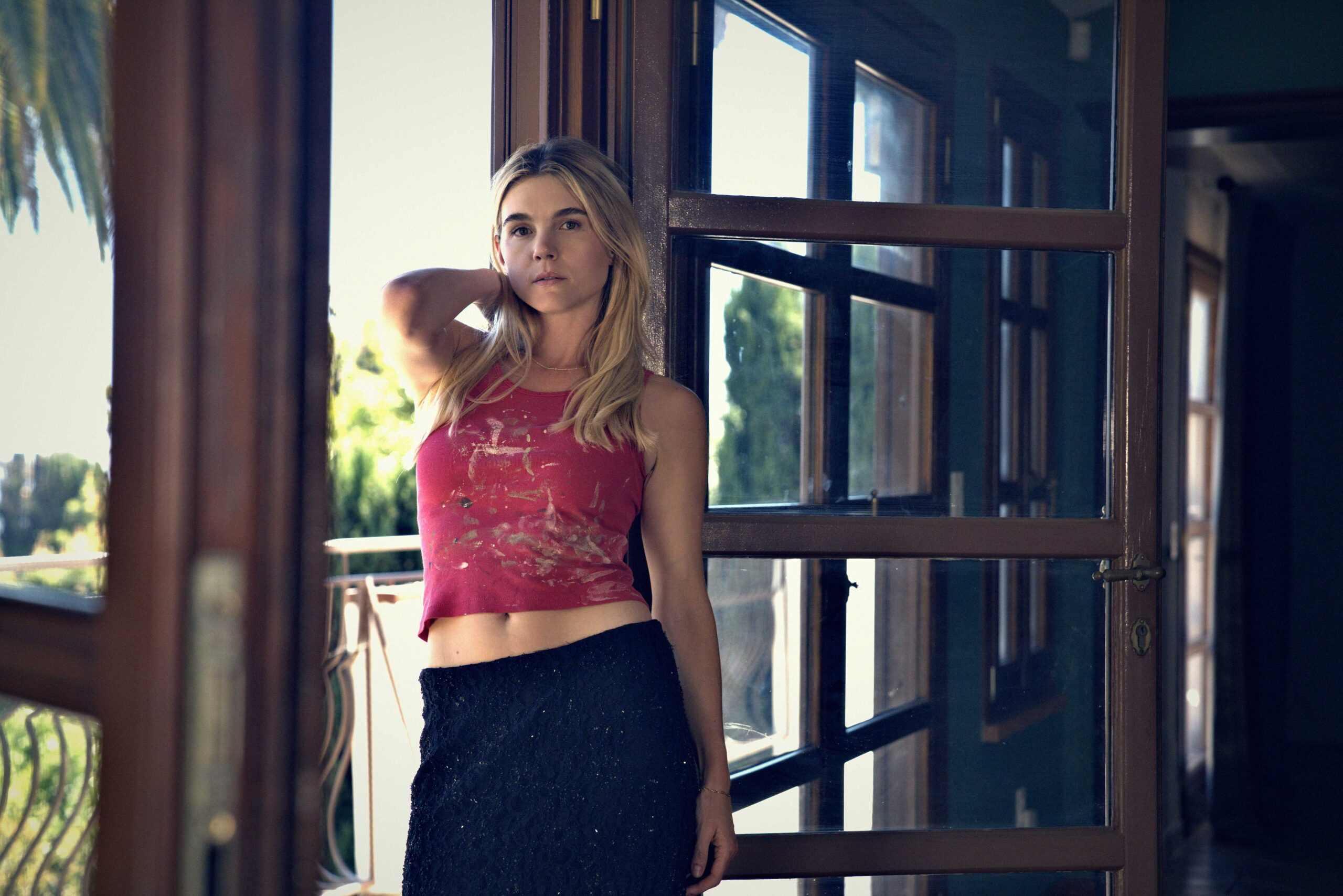
Watch the official trailer for Gator Face.
Gator Face is now available on VOD and streaming, with a physical release to follow in October.
Discover more of Tabitha Brownstone’s work and follow what’s next on her official website.