




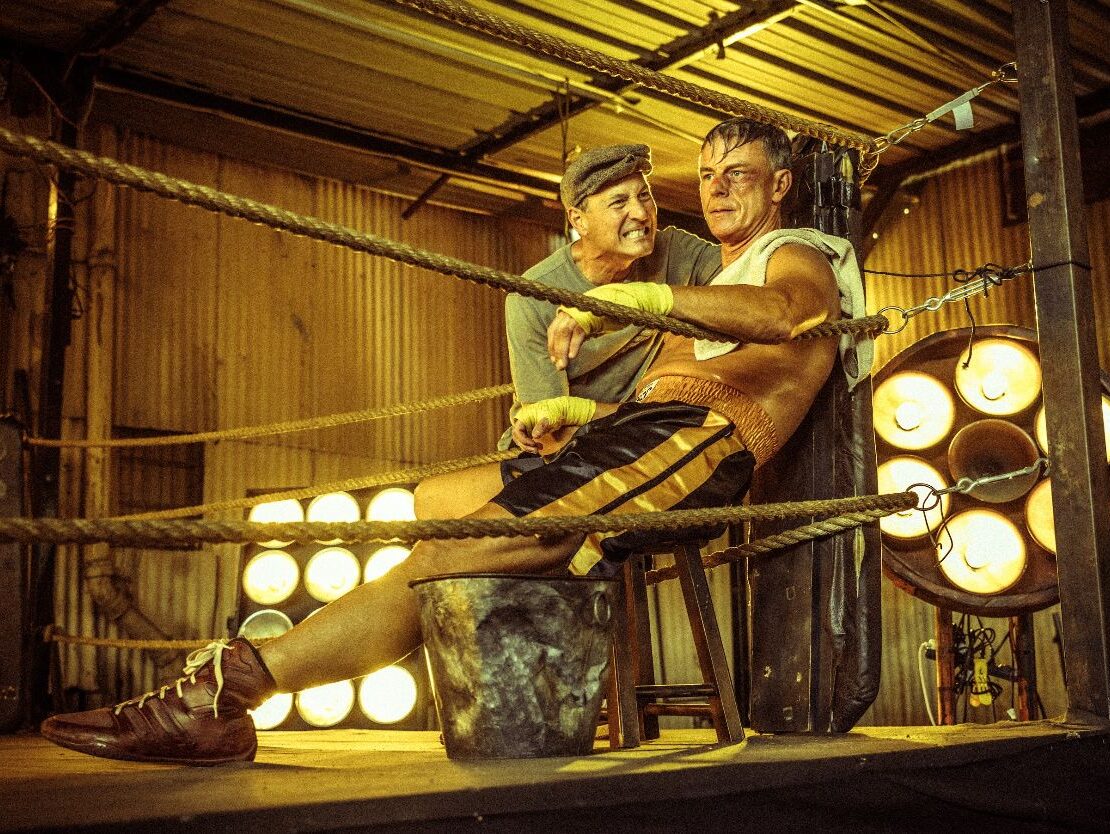
For Shaw Jones, boxing started as a way to survive bullying. One fight inside a Tennessee prison became a memory he never forgot. He still remembers the sound of the doors. Heavy steel doors closing behind him one by one as he walked deeper into a maximum-security prison in the rural South. He was fourteen years old.
Most teenagers spend their evenings worrying about school or friends. That night, Shaw was walking past razor wire, armed guards, and watchtowers on his way to a boxing match. It sounds unbelievable now, which is part of the reason he decided to tell the story.
Shaw jokes that his connection to prison lore may have started earlier than he realized. Long before stepping in front of the camera or onto a stage, Shaw was just a kid in Memphis trying to find his footing, belting out “Jailhouse Rock” by Elvis Presley, unknowingly foreshadowing the kind of prison story that would one day inspire his short film.
The carefree moments of childhood weren’t always easy to come by. School could be rough. He was bullied and often felt like he didn’t quite fit in. At the same time, his family was going through a difficult period as his parents’ marriage fell apart. For a young teenager, it was confusing and lonely. Then boxing changed things.
His father introduced him to the sport, and the gym quickly became a place where Shaw felt a sense of control and purpose. The discipline of training gave him confidence at a time when he needed it most. He began competing as an amateur and took the sport seriously, entering tournaments and imagining where it might lead. One fight in particular stayed with him.
His coach arranged an exhibition match inside a maximum-security prison called Fort Pillow. Shaw was still a kid when he walked in that night, passing through layers of security as guards opened and closed the heavy chain doors behind him. Each one slammed shut with a metallic echo that made the reality of the situation impossible to ignore.
He remembers the fear more than anything. The kind of fear that forces you to confront yourself. He also remembers scanning the crowd and seeing his father’s face among the inmates who had gathered to watch. For a boy searching for approval, that moment meant everything.

Years later, Shaw built a career as an actor, appearing in projects that range from independent films to television series such as Star Trek: Picard, NCIS, and Your Honor. His performances often carry an emotional weight that feels personal. That honesty is not something he tries to manufacture. It comes from experience.
Now he is returning to that night from his teenage years. Shaw recently wrote a short film called Fort Pillow, named after the prison where the fight took place. The story centers on a young boy dealing with bullying, family tension, and the complicated relationship he has with his father. Much of it unfolds during that unforgettable evening inside the prison. “It’s a true story,” explains Shaw. “It’s not based on a true story. It is a true story. Nothing is made up, and that’s what makes it so interesting.”
For him, telling his truth now feels like closing a circle that began decades ago when a frightened teenager walked through those prison gates and stepped into the ring. In the conversation that follows, Shaw talks about that night, the role boxing played in helping him navigate a difficult period in his life, and why this story stayed with him long enough to become a film.
Tell us about the short film your wrote called Fort Pillow.
I’m super excited about this short film that I’ve written based on a moment from my life. It deals with a young boy overcoming hardships, like bullying and not fitting in. It’s a story about when I was boxing and my coach got me a fight at a maximum-security prison. It’s also about a father and son, a fourteen-year-old trying to make sense of the world, who learns about it through boxing and, most significantly, on a certain night at a maximum-security prison. That was the name of the prison and the farm.
What inspired you to turn this personal story into a short film now, at this point in your career?
Being bullied and then learning to box was extremely formative for me. My family life wasn’t good at the time. My parents were divorcing, and I was a young teenager who was lost, unhappy, scared, all of those things. Boxing helped me overcome that period of my life. The experience had such a strong effect on me that it stayed with me.
Also, whenever I’ve told people the story of fighting in a maximum-security prison, they don’t believe it. They’re like, “That would never happen. You couldn’t take a minor into a prison to fight.” But I was fourteen or fifteen years old. I was a kid walking into a prison in the rural South, and the fear I had to walk through that night was overwhelming. I was questioning everything in my life in that moment. That’s really why I wanted to tell the story.

Can you take us back to that night at the maximum-security prison. What do you remember most vividly?
I remember walking into the prison through coils of razor wire, past guards and gun towers. We went through three or four heavy chain doors that opened electronically and slammed shut behind us, one after another. I remember the sound of those doors clanging closed and trying to battle the fear I was feeling as they locked behind me.
The story touches on heavy themes like bullying and not fitting in, how did those experiences shape who you are today?
Not fitting in and being bullied were really the spark that caused everything. As an actor, I’ve always sort of felt like I didn’t fit in. I learned how to camouflage myself into different groups, to become different versions of myself depending on where I was. I think that ability really helped shape who I am today.
Was writing about such a personal chapter cathartic, or did it bring up challenges you didn’t expect?
It was cathartic more than anything. It made me really focus and revisit a time in my life that some of my defence mechanisms had pushed down. It forced me to put a spotlight on my upbringing and those harder years.
Tell us more about the father-son dynamic in the film. How did your own relationship with your father influence that storyline?
My dad was the one who got me into boxing and supported it. At the same time, he could be a very cold man, not very emotional. His approval meant a lot to me. That particular night at the prison may have been the first and only time I really felt his approval. I remember looking out into the crowd and seeing his face among the inmates. That moment stayed with me.
Through Fort Pillow, Shaw Jones turns a frightening night in a Tennessee prison into a story about resilience, courage, and the choices that shape us. He hopes audiences will see that even in moments of fear or pressure, how we respond matters. Confronting challenges, learning from them, and sharing those experiences can inspire empathy and understanding in others. It’s a story that reminds us all that the lessons we carry from youth can last a lifetime.