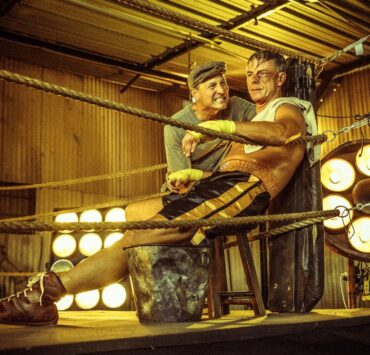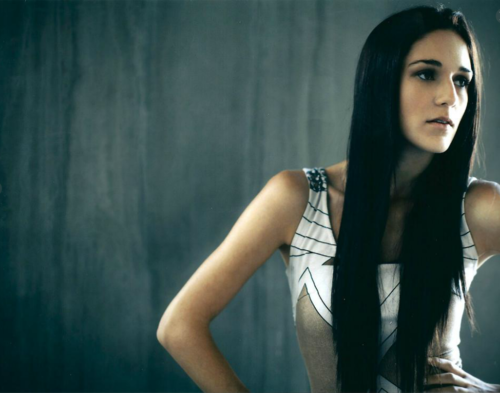




There’s a certain stillness in the struggle, an unspoken strength in doing what’s hard, in showing up when your energy wanes, and in choosing persistence over ease, day after day. There’s a kind of quiet fight in pushing yourself further, in showing up even when you’re tired, in choosing discipline over comfort again and again. Sophie Spurn carries that into every movement. It’s not aggressive. It’s intentional. And somehow, that makes it even stronger.
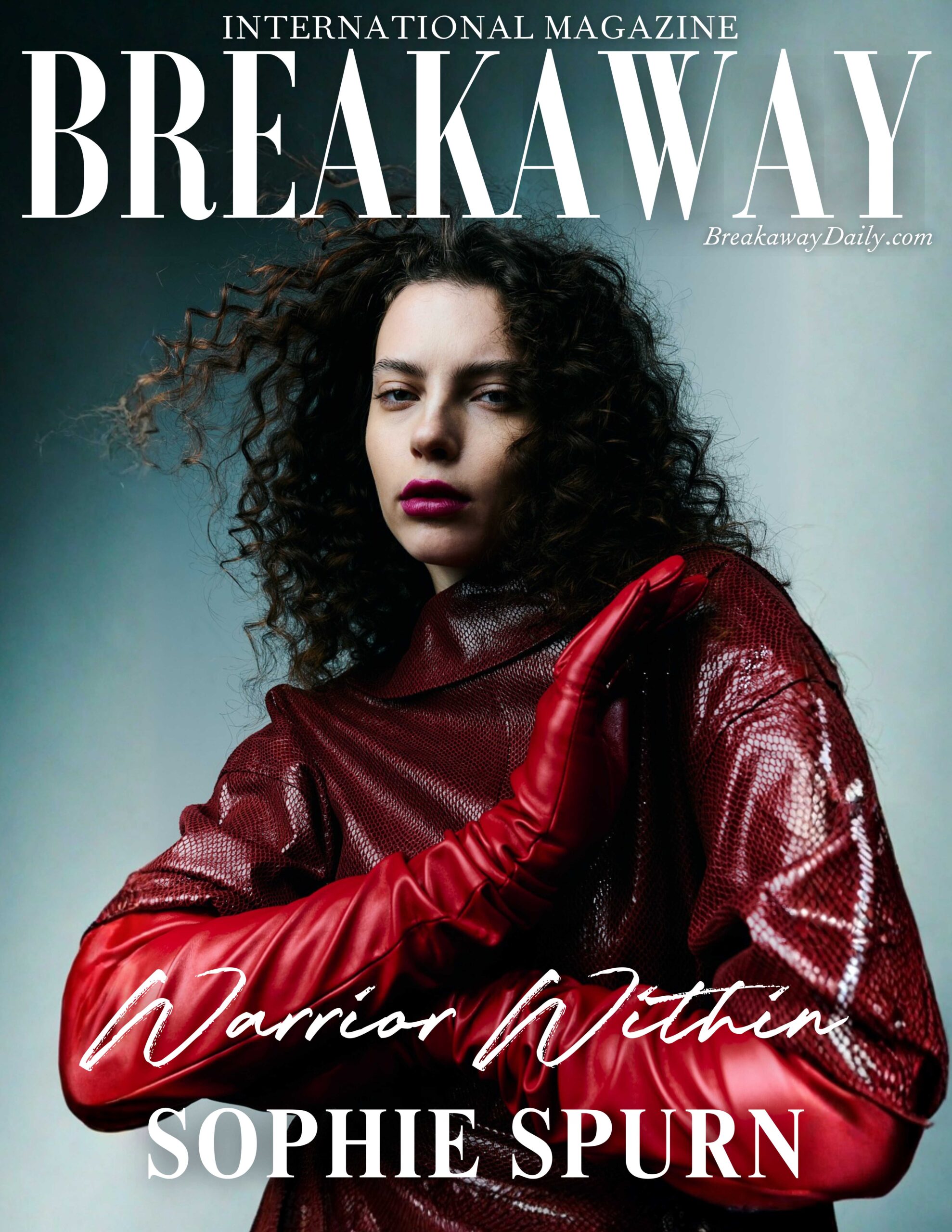
There’s a quiet intensity in the way Sophie Spurn moves, as if dance isn’t something she does, but something she commands. Every motion carries purpose, power, and control, blurring the line between rhythm and force. Born and raised in Calgary, Alberta, Sophie’s connection to dance began almost before she could form full sentences. By the age of three, she was already tumbling and twirling her way through local studios, unknowingly laying the foundation for what would become a boundless creative career.
A graduate of The Edge School for Athletes in 2022, Sophie’s discipline and drive carried her to The CLI Conservatory in Massachusetts, an elite training ground founded by choreographer Teddy Forance. There, she immersed herself in a transformative year of pre-professional development, training under world-class artists including Brian Friedman, Lucy Vallely, Andrew Winghart, and Johnny Blaze. “It was like being dropped into the heart of the industry,” Sophie reflects. “Every day was about discovering who I was as an artist, not just a dancer.”
There are messy rehearsals. Missed counts. Days where nothing quite lands the way it should. And those moments matter more than the polished ones, even if no one sees them. Because that’s where the growth happens; in the frustration, in the repetition, in choosing to keep going anyway.
Steps Of Strength
“I have really learnt the importance of keeping the fire in me lit no matter what. I want people to feel something real when they watch me dance. If I can spark even a moment of connection, that’s everything.”
Sophie’s time at CLI was a catalyst that pushed her versatility across ballet, contemporary, jazz, hip-hop, heels, tap, acrobatics, ballroom, lyrical, pointe, and musical theatre. Through teaching opportunities and live shows Sophie learned to fuse precision with vulnerability, to make every performance a fuzion between technique and truth.
Following her Conservatory chapter, Sophie took her talents to the open sea joining Royal Caribbean Cruise Lines as a company dancer. Performing in the high-energy theatre productions Voices and The Effectors II: Crash and Burn, she found herself soaring, quite literally, through the air as she added aerial work to her expanding repertoire.
Most recently, Sophie stepped onto an international stage as the sole dancer featured in the show opener video for Bryan Adams’ Roll With The Punches tour. She also appeared in Adams’ A Little More Understanding music video, a collaboration she describes as “a surreal milestone,” further cementing her presence in within truly global, large-scale productions.
Now based in Vancouver, Sophie is charting her next creative evolution. She continues to refine her craft, dive deeper into choreography, and explore the balance between individuality and collaboration. Her mission? To contribute something genuine and deeply felt to Canada’s artistic landscape.
Fearless in Motion
What did your first solo for film reveal to you about creation, control, and your artistic voice?
While attending The CLI Conservatory, we were given the opportunity to choreograph a solo individually which we got professionally filmed while allowing us to direct the creation with lighting, colouring, costume, etc. This had been my first real exploration of choreography in a video format, and came to be an extremely fulfilling experience artistically. To have been given such positive feedback from people I respect so much really propelled me to keep exploring what creation means to me.
What did stepping into professional spaces teach you about presence, growth, and the realities of the industry?
My biggest takeaway has been learning how to be a professional. How to step into a professional space and have a strong energy in the room. To take my strengths and market them to best serve me, while remembering to always be a student and to be open to constant growth. However, though I will always be open to growth and change, I have also come to learn that this industry is not soulfully based on talent. I grew so much as a young adult and talent in my dancing, but really came to learn that often the way you market and showcase your talent can be just as (if not more) important.
In a more loving sense, I also learnt a lot about myself as an artist and what connects me to the art on a deeper level. I have always had a deep passion and drive for dance, but it wasn’t until I was exposed to the choreographers and range of artistry the industry offers that I really feel a heavy sense of purpose to dance. I experienced immense growth throughout my training, feeling continually challenged across every area of my life at the time. It was exhausting, but I always tried to remember that working through exhaustion can bring real change and growth. Not to mention the depth, range, and maturity it brought out of my dancing.
Breaking Gravity
Performing in Royal Caribbean’s “Voices” and “The Effectors II: Crash and Burn” introduced you to aerial work. How did integrating aerial elements expand your performance capabilities?
Learning aerial work was one of my favorite skills to explore over the course of my contract. I trained in Lera, Hand Loops, and Rope work on a weekly basis, which was an excellent form of cross-training alongside dance. I also had the privilege of exploring 2-point harness work and 3D aerial work on occasion.
About midway through, I had the opportunity to step in for one of the featured singer roles in The Effectors II, which included a 3D aerial solo. 3D aerial is a type of harness work where the performer is connected to four points, moving throughout the theatre and over the audience while flipping and performing choreography. It was a unique challenge in many ways. Not only learning the choreography in the air, but also adjusting to flying over an audience and maintaining my center while in constant motion.
Though I am not a singer, I worked with a vocal coach to prepare for lip-syncing, which proved challenging while dancing and flying. This is something dancers are typically trained never to do! I also performed my speaking lines live, marking my first experience using in-ears and diving deeply into a character. I felt honored to step into such an integral part of the show and, of course, couldn’t help but feel like a pop star for a short while.
Being able to classify myself as an aerialist has expanded my versatility as a performer and will help me market myself for future opportunities. I hope to return to consistent aerial training and continue developing these skills for the next role that calls for them.
What challenges did you face learning aerial work, and how did you overcome them?
Aerial training was a massive challenge for me. Feeling like a beginner in a new skill can be difficult, but aerial work was something I was consistently excited to work on and see growth in. The amount of body control and grace needed to fly came to be extremely challenging at the beginning. I have gotten used to making such exhausting and physically demanding movement look easy and keeping the attention of those watching while doing it. Somehow when it came to being in the air and trying to apply the same idea, everything became so much more unnatural and chaotic. But with time and patience I felt my strength grow to where flying became fun and exciting rather than anxiety inducing.

How did you break mental blocks and transform those into strength and capability in your aerial work?
When I began training in aerial work, the full-body strength required triggered the old belief that my strength wouldn’t be enough. I found myself holding back, hesitant to fully embrace being a beginner and accepting my taller stature, and had to remind myself that growth starts somewhere. Over time, I stepped away from these self-imposed limitations and began to feel truly strong and capable. That’s when I noticed real growth—not only in my aerial work, but in my overall body strength and confidence as a performer.
Who were the mentors who shaped you into the dancer and artist you are today?
I would not be the dancer or artist I am today without my teachers. To each and every mentor who saw me, challenged me, and supported me, I am endlessly grateful.
Teddy Forance demanded greatness, pushing us to compete only with ourselves and to be better every day. He was exactly who I needed as I left home and began pursuing this industry. One of the most passionate and genuine people I’ve had the privilege of training under, Teddy continues to remind me to hold myself to a higher standard—to “level up,” as he would say. I would not have the confidence, drive, or dedication I carry today without him.
My journey also wouldn’t be what it is without the mentors who shaped me growing up. The teachers at Edge Studios saw something in me early on and gave me the foundation to grow. Training through COVID during my high school years left no room for complacency, and while dance can be demanding, I look back with deep gratitude—for the discipline, the memories, and the lifelong support system that helped raise me.
What have been the most valuable lessons you’ve learned in navigating the industry?
Versatility is key. Being able to offer yourself in many facets opens you up to far more opportunities. The goal is to have multiple skills and styles in your back pocket, so you can confidently say “yes” to whatever a job asks of you.
Genuine grit and hunger to achieve and succeed will always show through. I have really learnt the importance of keeping the fire in me lit no matter if its in class or on a job. Someone who has an attitude of determination and drive is the person professionals want to work with.

How do you stay grounded and sustain your passion while navigating the demands of the dance industry?
I think it’s important to remember there’s room for everyone in this industry. Casting involves so many factors, so patience and consistency are key. It’s crucial not to take things personally. At the same time, making your passion your career can be tricky. I have to make time to nurture my inner artist alongside the whirlwind the industry can be. I make it a priority to dance for myself, without thinking about who’s watching, and to check in with what grounds me as a mover. With the industry demanding so much mentally and physically, that balance keeps me connected to my artistry while navigating the demands of the profession.
Sophie moves like a warrior, not because she fights others, but because she fights for herself. Every sharp extension, every grounded stance, every leap carries intention and purpose. And maybe that’s the part that sticks: it’s not just about watching someone dance, it’s about feeling what it takes to claim your own space, to move through life with focus and courage. That’s the power of a warrior, it’s not just on stage, it’s within all of us, waiting to be claimed.